Global Chaucers and Digital Humanities: new Accessus article

Mehmet Güleryüz, "The Evening Sun," 2013, from his exhibit "With One's Eyes Open” at The Empire Project (Istanbul), 7 March-27 April 2013.
Mehmet Güleryüz, “The Evening Sun,” 2013, from his exhibit “With One’s Eyes Open” at The Empire Project (Istanbul), 7 March-27 April 2013.

We’re excited to announce that our article, “Global Chaucers: Reflections on Collaboration and Digital Futures,” appears in the latest issue of Accessus.  In it, we consider what Global Chaucers can teach us about Chaucer, digital humanities, medievalism, and collaboration. A lot has happened with GlCh in less that three years, and we value getting to share what we’ve learned from the thrilling experience. Our deepest gratitude to Eve Salisbury and Georgiana Donavin, Accessus‘s editors.

Review of Chaucer in Denmark at Medievally Speaking

by Candace Barrington

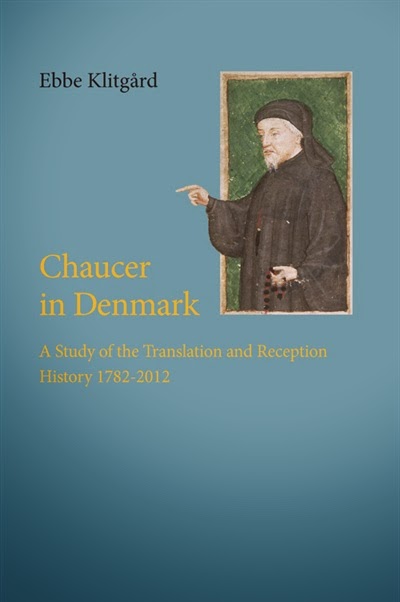
DenmarkAn early contributor to the Global Chaucers blog, Ebbe Klitgård, published his one-of-a-kind study, Chaucer in Denmark,  in 2013.  I had the opportunity to review it for Medievally Speaking.  Without reprinting the entire review, I draw your attention to my final admonition:

With the commendable precedent for the study of Chaucer’s non-Anglophone reception now in place, Chaucerians and medievalists should encourage similar studies by our colleagues in predominately non-Anglophone universities and cultures.  Such work enriches the study of Chaucer in important ways, yet its survival is not necessarily ensured.  Because we know first-hand the difficulties of maintaining medievalist lines in English departments where we serve an English-speaking student population, we should be sympathetic to the even more precarious situations of Chaucerians housed in foreign-language departments. By attending to what they can tell us, ordering their books for our campus libraries, and by incorporating their research and translations into our own studies, we can support their important work and their careers.  We have just begun to listen to them; it would be shameful to lose their voices now.

Ebbe will be at the NCS Congress in Reykjavik this summer and one of the panelists on the Global Chaucers Roundtable, where his topic will be “Chaucer in Denmark since 1945: A Discussion of Some Adaptations and Translations, with a Focus on Illustrations”

The Medieval Globe: a new journal of interest

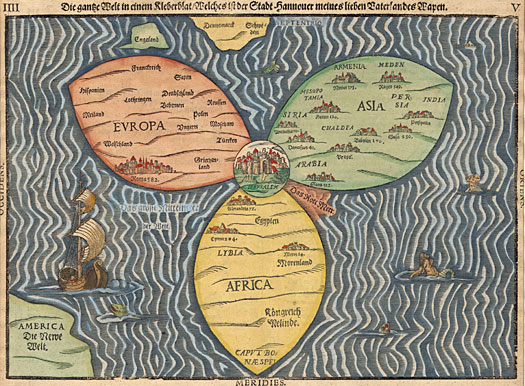
map

by Candace Barrington

The Medieval Globe, a new journal edited by Carol Symes, is now accepting submissions. It explores the modes of communication, materials of exchange, and myriad interconnections among regions, communities, and individuals in an era central to human history. It promotes scholarship in three related areas of study:

1. the direct and indirect means by which peoples, goods, and ideas came into contact

2. the deep roots of allegedly modern global developments

3. the ways in which perceptions of “the medieval” have been (and are) constructed and deployed around the world.

This third area will be of particular interest to those involved in Global Chaucers, it seems, and we look for suggestions for possible collaborative projects. If you have any ideas or proposals, please contact either Candace (barringtonC@ccsu.edu) or Jonathan (jhsy@ccsu.edu).

A Global Chaucers post on the New Chaucer Society blog

Hadieh-Shafie-10450-Pages.-Photo-Sothebys

by Candace Barrington

Thanks to Ruth Evans and the New Chaucer Society blog for the opportunity to share some preliminary thoughts on Chaucer’s Voices! And thanks to John Boje (South Africa), José Francisco Botelho (Brazil), Lauri Pillter (Estonia), Alireza Mahdipour (Iran), and Nazmi Agil (Turkey) for so graciously sharing their time and expertise. It’s been an auspicious start to a fascinating project.

Chaucer in China (2): Reading Lin Shu

by Candace BarringtonLin_Shu

In this second installment of Chaucer in China, I am interested in the first appearances of any Canterbury tale in Chinese and in the paradoxical circumstances of their composition: The Canterbury Tales was not their immediate source text, and the translator, Lin Shu (林紓), did not know English.  His Sinicized  Chaucers provide an instructive contrast to Fang Chong’s mid-century translations that Jonathan Hsy wrote about in Part 1. Unlike Fang, who had studied English and relied upon Chaucer’s text to complete the first translation of The Canterbury Tales into Mandarin, Lin Shu knew no foreign language and relied upon Charles Cowden Clarke’s bowdlerized Chaucer for his source text.  As a preface to our study of these translations, this post describe their circumstances, for which I rely on my correspondence with Michael Gibbs Hill as well as his fascinating monograph, Lin Shu, Inc: Translation and the Making of Chinese Culture (Oxford UP, 2013). In what follows, I summarize appropriate sections of Hill’s cultural history of Lin Shu’s creative translations, and then I suggest what questions they raise and what they have to tell us about Global Chaucers and larger translation issues.

Lin Shu (1852-1924) was a leading translator and dominant presence in China’s literary culture during the late Qing dynasty (ca. 1895-1911) and the early Republic (1912-1927). Though one of China’s most prolific translators and writers at the turn of the twentieth century—he was responsible for over 180 translations of western literary works into classical Chinese—the early translations credited to him were the result of a collaborative process known as tandem translation (duiyi): with the assistance of an oral interpreter who knew the language of the source text well enough to orally translate, line-by-line,  western works of literature into vernacular Chinese, Lin Shu then further translated the text into the ancient prose style (guwen). Through this factory-like process, he became one of China’s most recognizable and highly compensated literary figures. Because he inherited a set of translation practices that considered fidelity to the source text less valuable than conveying an artistry and morality consistent with traditional Chinese values, Lin Shu’s tandem translations and ancient prose style met his earliest audience’s expectations.  These translations juxtaposed traditional orthodoxy (through their linguistic style) and Western Learning (through their source texts), simultaneously introducing Western concepts in the guise of orthodox form and lending his translations credibility. He used the cultural pulpit created by these translations to advocate the ancient prose style—guwen—for widespread literary use, a controversial position for numerous reasons, including guwen’s association with intellectual, academic work rather than narrative fiction. Lin Shu’s translations also faced suspicions that any translation into Chinese faced.  Because the earliest Chinese translations of European and American texts were the consequence of China’s colonial and imperial relations with the West, any translations tagged as Western were colored by the Chinese ambivalence toward Western Learning, seeing in it both a source of new knowledge and an effort to enforce religious conversion and political subjugation.  In the end, his profitable combination of tandem translations and ancient-prose style undermined his advocacy of guwen for wide-spread literary use. When he eventually lost control of the quality of his translations, he and his classical style became associated with retrograde conservatism and shoddy commercialism.

This trajectory of his reputation, from renowned literary translator to discredited hack, provides an important context of Lin Shu’s Chaucerian translations because they appear at the end of his career, when his translation practices aimed for quantity, not quality, and his reputation had become irreparably tarnished.  His later reputation might explain why the series of individual tale translations (appearing between 1916 and 1925) were ignored by accounts of European medieval literature in China, even though they seem to be the first Chinese translations of Chaucer’s works.  As noted by a short article appearing in 2011 in the Shanghai Review of Books (Shanghai shuping), they predate by a decade the once presumed arrival of European medieval literature in China in the 1920s and 1930s.

Relying on Charles Cowden Clarke’s early-nineteenth-century edition designed for children—Tales from Chaucer in Prose—Lin Shu translated nine (of Clark’s ten) Chaucerian tales:

  • “Gaining a Wife from a Duel,” from The Knight’s Tale
  • “The Princess Encounters Hardship,” from The Man of Law’s Tale
  • “The Prodigy of the Forest,” from The Wife of Bath’s Tale
  • “Griselda,” from The Clerk’s Tale
  • “Body and Soul,” from The Squire’s Tale
  • “Three Young Men Encounter the God of Death,” from The Pardoner’s Tale
  • “The Mouth of the Dead that Could Sing,” from The Prioress’s Tale
  • “Talk about Chickens/Cocks,” from The Nun’s Priest’s Tale
  • “Gamelin,” from the apocryphal The 2nd Cook’s Tale

The first eight appeared in 1916 and 1917 in Short Story Magazine (Xiaoshua yuabao); the last appeared in 1925 in Story World (Xiaoshuo shijie). Both magazines were profit-seeking ventures of Commercial Press, and they targeted a non-academic, non-intellectual audience by combining a sense of conservative Chinese propriety with progressive Western learning, thereby appealing to middlebrow readers wanting to acquire both via leisure reading.

These Chaucerian tales appear when Lin Shu and his collaborators were flooding the market with translations.  Between 1913 and 1918, they published forty-one new novels, and in the first eight months of 1916, they submitted 572,496 characters of material. This pace resulted in translations riddled with errors.  Facilitating that pace and perhaps further explaining the shoddy translations was Lin Shu’s amended translation practice. By 1911, he seems to have abandoned his previous method of tandem translation for something more closely resembling subcontracting: rather than transpose the oral text into a classically-styled, written form, Lin Shu would have his collaborators prepare a written translation that he would then edit. This new practice is particularly significant for the Chaucerian texts because the collaborator, Chen Jialin, published his own translations of other texts into classical Chinese, making it unclear how much a hand Lin Shu had in the published versions of the Chaucerian tales.  Nevertheless, it was Lin Shu’s name (and not Chen Jialin’s) associated with the published stories. And it was via Lin Shu’s reputation that Commercial Press developed an aggressive campaign using the short works in Short Story Magazine to market his longer works as both entertaining and enlightening in order to sell the deluge of translations they had purchased from him.

So far, Lin Shu’s Chaucerian tales have not been back-translated into English, yet we can surmise some of the translated tales’ important characteristics. For instance, because they are based on Clarke’s translations for children, we can be assured they were sanitized, keeping at a distance the vulgarity conservative Chinese found repulsive in Western literature while also proffering a Victorian purchase on the tales’ morality. His dual strategy of tandem translation and ancient-style prose means Lin Shu avoided many of the problems noted by Mimi Chan (the only translator of Chaucer into Chinese to write about translating from Middle English verse into Chinese verse: “On Translating Chaucer into Chinese,” Renditions 8 [1977]: 39-51). By focusing on plot and character development, Lin Shu did have to be concerned  with re-creating semantic ambiguity, rhetorical devices, meter, form, or the sly Chaucerian persona; any artistry came through the ancient-prose style. And because he translated into prose, he could readily incorporate into the story any explanations of medieval European culture foreign to Chinese readers, such as Christianity and its attendant professions.

Once we begin to study Lin Shu’s translations more full, we will want to address several questions:

  • How much do these translations demonstrate that Lin Shun and Chen Jialin knew about Chaucer, his works, and his cultural context?
  • Who were their imagined audience? Did the translations present themselves as entertainment or works of learning?
  • Do the tales and any accompanying paratexts use Chaucer’s texts to comment on contemporary cultural debates through revisions to the source text, a practice Hill’s study reveals in Lin Shu’s translations of Dicken’s novels and Stowe’s Uncle Tom’s Cabin?
  • Do these translations maintain or adjust or dismiss Clarke’s (embedded) moralities?
  • Do these translations continue Clarke’s efforts to create a sense of chronological distance via archaic vocabulary and syntax?
  • Did the translations introduce neologisms from English or press Chinese terms into new meanings?
  • How well do these translations maintain the guwen style that marked Lin Shu’s earlier translations?

Lin Shu’s Chaucerian translations also have much to reveal about the unnatural division between original works and translation, and  they contribute to our thinking about translation in at least three ways. First, as Michael Hill persuasively argues, these translations deserve to be studied as translations (and not as debased adaptations) because they were presented and received as translations.  At the same time, they also merit study as original works of literature specific to a volatile time and place.  Finally, they need to be studied as possible fictitious translations, which, as Gideon Toury argues, “try and put the cultural gatekeepers to sleep by presenting a text as if it were translated” (“Enhancing Cultural Changes by Means of Fictitious Translations,” in Translation and Cultural Change: Studies in History, Norms, and Image Projection, ed. Eva Hung [John Benjamin Publishing, 2005]: 3-17). (This third aspect is particularly interesting vis-à-vis Lin Shu because, according to Hill, in the 1910s and 1920s, Lin’s rivals raised more objections to his prose style than to possible inaccuracies in his work.)  It doesn’t require placing much pressure on any of these approaches to reveal their constant overlap and interplay with one another, and Chinese Chaucers look like a good place to start.

Tracking down Global Chaucers

by CANDACE BARRINGTON

We have now identified Chaucers in nearly 50 country/ languages combinations:

  • Belgium/Dutch
  • Belgium/Flemish
  • Belgium/French
  • Bolivia/Spanish
  • Brazil/Portuguese
  • Bulgaria/Bulgarian
  • China/Mandarin
  • Croatia/Crotian
  • Czech Republic-Czechoslovakia/Czech
  • Denmark/Danish
  • Egypt/Arabic
  • Esperanto
  • Estonia/Estonian
  • Finland/Finnish
  • France/French
  • Germany-GDR/German
  • Caribbean/Caribbean English
  • Greece/Greek
  • Hungary/Hungarian
  • Iceland/Icelandic
  • India/Tamil
  • India/Malayalam
  • India/Marathi
  • Iran/Farsi
  • Israel/Hebrew
  • Italy/Friulian
  • Italy/Italian
  • Japan/Japanese
  • Latin
  • Mongolia/Mongolian
  • Netherlands/Dutch
  • Nigeria/Pidgin English
  • Norway/Norwegian
  • Poland/Polish
  • Portugal/Portuguese
  • Romania/Romanian
  • Russian Federation-Soviet Union/Russian
  • Serbia/Serbian
  • South Korea/Korean
  • Spain/Catalan
  • Spain/Spanish
  • Sweden/Swedish
  • Switzerland/German
  • Taiwan/Chinese
  • Turkey/Turkish
  • United Arab Republic/Arabic
  • Wales/Welsh
  • Yugoslavia/Serbo-Croatian – Serbian

How have we identified these? A surprising number have come from other Chaucerians and translators who are excited by the Global Chaucers project. Nazmi Ağıl, Yoshiko Asaka, Zuleyha Cetiner-Oktem, Michael Hill, Alex Huang, Gregory Jember, Akiyuki Jimura, Maria Kaliambou, Yiorgos Kalogeras, Júlia Képes, Ebbe Klitgård, Alberto Lázaro Lafuente, Donghill Lee, Takami Matsuda, Noriko Matsui, Tim Miller,Oya Bayiltmis Ogutcu, Huriye Reis, Sif Rikhardsdottir Jonathan Stavsky, Michelle Warren, and Gyöngyi Werthmüller are among the many scholars who have provided us with invaluable lists and leads.

I was able to fill out that initial list with the aid of the Index Translationum . While at the NEH Institute, The Centrality of Translation to the Humanities, I was introduced to this fabulous index. The first volume dates from 1932, and with few exceptions it has appeared annually since then. The print collection at University of Illinois, Champaign-Urbana begins with volume 1 and continues until 1978; after that the entries are digitized and available online. It was an invaluable resource for identifying Global Chaucer we did not already know about.

Chaucer first appears in the Index in a Swedish translation by Harald Jernstrom, #1316, immediately above Agatha Christie's two Swedish translations.
Chaucer first appears in the Index in a Swedish translation by Harald Jernstrom, #1316, immediately above  two Swedish translations of Agatha Christie novels.

Established by the League of Nations in 1932, the Index had a rather modest start, a marker of the status of translation at the time. Entries in the slender, early volumes suggest that translation was not a robust enterprise. French and English vie for dominance, with German seeming to suffer still from the disgrace of defeat and the economic indignities of the Weimar Republic. And few texts were translated into (much less out of) what we would now call minority languages, such as Chinese, Polish, Arabic, Czech. In the Index, Chaucer makes his first appear in 1938 with Harald Jernström’s

Swedish translation, Canterburysägner.

Mark the huge jump in translations indexed between the end of the old series and the beginning of the new series after World War 2.
The size of the volumes marks the huge jump in translations indexed between the end of the old series and the beginning of the new series after World War II.

After World War II, translation becomes an essential enterprise of the United Nations (which replaced the defunct League of Nations), and with the 1946 volume the Index is placed under the aegis of UNESCO and the numbering system begins anew. Quickly the number of translations as well as the number of languages involved in translation expands. The print volumes stop in 1978 when the Index was computerized. Although researchers must still return to the printed indices for pre-1979 records, all computerized records (that is, from 1979 to the present) are available on a fully searchable online database.

The print volumes stop in 1978 when the Index was computerized. Although researchers must still return to the printed indices for pre-1979 records, all computerized records (that is, from 1979 to the present) are available on a fully searchable online database.

Because I first discovered this index via a link at the University of Illinois Library, I was surprised to learn that it is available at no charge to the general public through the UNESCO portal. Researchers interested in the reception of other authors and texts will find this database a valuable resource.

And Chaucerian translations remain scant until after World War II when, along with translation in general, they take off. From 1943 until the present, there are only a few scattered years when there is no non-Anglophone translation of Chaucer.

In addition to uncovering some unexpected translations—I’m absolutely fascinated by the 2006 Mongolian translation, and I’m eager to learn more about it and its translator—I noticed several unexpected patterns that merit investigation. For instance, Chaucer’s tales are steadily published in new editions and combinations of tales in the German Democratic Republic (East Germany). If book publication was as closely regulated as I’ve always imagined, then what could have been the interest in keeping Martin Lehnert’s translation of Canterbury-Erzählungen on bookseller and library shelves? Equally tantalizing are Boris Hlebec’s translation into Serbian, Kanterberijske priče, reissued in 2004 and Luko Paljetak’s translation into Croat, Canterburyjske priče, which also appears in 2004 but as a first edition.

If you have ideas about ways to study these Global Chaucers, please let us know. The Global Chaucers project will be sponsoring some collections of essays, short and long. Stay tuned for more details, and let us know if you’re interested in participating!

Why Translations?

Image
Vasari’s The Temptation of St. Jerome @ Chicago Art Institute

by Candace Barrington

In July, I spent a wonderful three weeks at an NEH Institute, The Centrality of Translation to the Humanities, at the University of Illinois, Champaign-Urbana. I joined twenty-four other scholars from across the disciplines and at every stage of the academic career; many of them are published translators.  Guided by a two UIUC faculty, Chris Higgins and Elizabeth Lowe–as well as by St. Jerome, the patron saint of translators–we explored the seemingly limitless ways translation informs our study of  so many fields, including literature, history, religion, and performance.  The reading list was relentless, and the discussions with fellow scholars always provocative.  I learned so much about translation and translators.

Obviously, translation is at the core of the Global Chaucers project. To begin with, our primary resources are the wondrous myriad of translations and appropriations from every continent.  Thus far, we’ve identified Global Chaucers translated into over 50 languages. In order for most Anglophone scholars to work with these translated texts, we will have to add another level of translation to our study by providing back-translations into present-day English.

On a practical level, these translations extend the life of Chaucer’s original by providing new readers, chronological longevity, and geographical expansion. Currently, there is little danger than Chaucer’s Middle English will fade away or die; his Middle English remains accessible to an educated readership, a body of readers which seems as robust as ever (if NCS membership reveals anything).  Nevertheless, anyone without that deep knowledge or the commitment to study needs a translation in the form of either a modernization or a regularization in present-day English.  With these translations, instructors in secondary- and college-classrooms can include Chaucer’s tales in a course syllabus without needing to set aside time to learn the language. (And though many decry such practices, I would maintain that faculty who teach Chaucer in the Middle English without including significant instruction and time devoted to practice reading the medieval language are doing worse harm: either the students have no idea what is happening in the course and can only parrot what the instructor tells them, or the students are resorting to a crib of some sort, the best of which the instructor has already deemed beneath the rigors of the course). Of course, much is given up, but the modernizations can provide a viable introduction to Chaucer’s texts.  Whether for student or casual reader, translations into present-day English extend Chaucer’s readership, though not without some controversial sacrifices.

The need for a translation in a non-Anglophone context is more readily apparent and less controversial.  Without these translations, Chaucer’s reach would be limited to a rather narrow swath of Anglophone readers.  Although English is becoming the lingua franca of the twenty-first century, it doesn’t mean that all those speakers will be looking to learn Middle English.  With these translations, a wider, global readership brings fresh eyes and new perspectives to Chaucer’s texts.

But why are these translations important to Chaucerians, those scholars devoted to studying the texts in their original Middle English?

Of course, translation enters our interpretation of Chaucer long before we encounter a translation into Czech or Mandarin.  For as experience and countless theorists remind us, there is no transparent or immediate utterance or communication; every utterance requires translation by the recipient. Even the original isn’t like itself—once in the hands of readers, it begins the unending process of shape-shifting, a process differing from translation as a matter of degree rather than kind.  It’s all translation, a process that Walter Benjamin calls “one of the most powerful and fruitful historical processes” (“The Task of the Translator” 256).*  And then when we read Chaucer in the twenty-first century, we have to translate him not only into a modern idiom (if only in our minds) but also across immense chronological, cultural, and (for many of us) geographical borders. In short, there is no way to read Chaucer in 2013 without translating.  Global Chaucers merely foreground the translation inherent in every reading practice.

For this reason, Global Chaucers have much to teach us.  When we identify and study these translations, we are engaged in more than collecting some shiny academic baubles.  At one level, we are understanding these texts through a very familiar medievalism paradigm recently examined by Tison Pugh and Angela Wiesl in Medievalism: Making the Past in the Present (reviewed here, here, and here). In this model we ask how various far-flung cultures have received Chaucer, how different cultural demands shaped his text for new purposes.  In many ways, the text translated out of the middle ages is studied less to gain a greater understanding of itself or its medieval precursor and more to gain a toehold on understanding the receiving culture. Such studies are a fascinating use of Global Chaucers.

Despite these interests, the NEH Institute’s theoretical readings and the translators in our cohort taught me that such models pre-limit what we allow ourselves to learn from the translated texts.  When we recognize translations as the final product of the translator’s extended close reading of a complex text, then we can also recognize that these translators and their translations have much to teach us about the medieval text.  For example, dislocations in the translation can help us locate interpretive cruxes that we might otherwise overlook.  Literal translations of words unfamiliar to the receiving language can remind us of the etymologies we might easily ignore.  Translations can expose ideas, idioms, word formations, and semantic constructions that have become invisible to us through overuse or underuse, a process both exacerbated by geographical and chronological distance.  The Danish translation of “masterly” in Ebbe’s Klitgård’s post is a good example of that phenomenon.  Other examples are Fang Zhong’s Chinese translation of Nicholas’ enchantment in The Miller’s Tale and Luk Bey’s comic book translation of John’s bedroom window into a garbage chute.  Caroline Bergvall’s Meddle English is premised on this linguistic phenomenon.  These examples are valuable because they demonstrate why Global Chaucers can be of interest to those not interested in medievalism. They nourish our reading of the original Middle English with ideas, associations, and images not previously available to us.

Translation provides something more, and it is a possibility that Benjamin suggests when he claims that “the life of the originals attains its latest, continually renewed, and most complete unfolding” in translation (Benjamin, “Task” 255). As faithful to the original as they might (or might not) attempt to be, a certain amount of inherent infidelity happens to serve a higher interest: “to release in his [sic] own language that pure language which is exiled among alien tongues, to liberate the language imprisoned in a work in his recreation of that work” (261).  The more I’ve learned about these translations and their translators, the more I’m convinced that they are interpreters who have much to teach us about reading Chaucer. Benjamin uses “lovingly” to describe their detailed work” (260). They are worth listening to and learning from. Having worked so closely with the text and thought through the implications of each word and line, translators clearly know Chaucer’s work as intimately as any reader possibly could.  Their insights need to be sought out and valued.

We can also learn much from what the receiving language explores, exposes, and expresses in the original’s gaps, such as forgotten etymologies and meanings excluded in the original but embraced in the receiving language. Sometimes, as we often see, these meanings are in conflict, but in this conflict a richer meaning is created for the reader. These translations can reveal what has been latent in the Middle English text and unavailable until it was translated into other languages, no matter whether those tongues were known to Chaucer and his contemporaries.  For that is the nature of language, to hide as well as to reveal. And each language has a different set of things that it reveals or hides.  The original and these translations supplement one another, supplying words, associations, and imagery not available in the others.

If the Chaucerian text celebrates polyvalency (which it clearly does), then surely translations deserve our careful study.

*Walter Benjamin, Selected Writings: Volume 1, 1913-1926, trans. Suhrkamp Verlag, ed. Marcus Bullock and Michael W. Jennings (Cambridge, MA: Harvard UP, 1997), pages 253-63.

Chaucer in Denmark

By EBBE KLITGÅRD, with an introduction by CANDACE BARRINGTON

Blog Post Kiltgård - Bergsøe p. 47 cropped

Today’s post is from Ebbe Klitgård,a Danish Chaucerian whose fascinating study, Chaucer in Denmark: A Study of the Translation and Reception History 1782-2012, appeared earlier this year. When I first met Ebbe at the New Chaucer Society Congress at Swansea, Wales, in 2008, I had just recently begun to imagine what a Global Chaucers project would look like, and in those early imaginings, Danish Chaucer did not loom large—or at all. That limited understanding shifted after talking to Ebbe, but it wasn’t until the publication of his study of Chaucer’s reception in Denmark that I appreciated how fully the Danish had embraced Chaucer as part of their literary culture. In this posting, Ebbe graciously shares a significant moment in that story: the efforts of Flemming Bergsøe to introduce Chaucer to the mid-century Danes.

The significance of Danish Chaucer was brought home to me a couple of weeks ago as I worked through the (currently undigitized) Index Translationum volumes from 1932 and 1978. It wasn’t difficult to notice that immediately after WWII the first non-Anglophone translations of the Canterbury Tales came out of Denmark, and Danish translations and appropriations outnumbered those being produced in other languages. Surely, as Ebbe’s post suggests, much of this outpouring is the result of Flemming Bergsøe’s enthusiasm as well as his attractive and engaging translations.

Ebbe’s post also provides a valuable reminder for what we can learn from these Global Chaucers. For instance, he explains that Bergsøe’s version of The Wife of Bath’s Tale translates the Middle English “maistrye” with “Herredømmet,” “a word that literally means ‘man’s judgment’ but is used broadly about both sexes when in power. Still the literal meaning carries funny connotations when used in a connection like this.” By drawing our attention to this one literal translation, Ebbe and the Danish remind us how audacious the Wife is when she demands “maistrye,” with its roots in the masculine “master.”

We think you will find both Flemming Bergsøe’s translation and Ebbe Klitgård’s explication fascinating examples of what Global Chaucers have to offer. Please share your thoughts with us. –CB

A Danish 1940s Translator of The Wife of Bath’s Prologue and Tale: Flemming Bergsøe.

By Ebbe Klitgård, University of Roskilde, Denmark

This posting contains an edited and abbreviated extract from my recent book Chaucer in Denmark: A Study of the Translation and Reception History 1782-2012 (Odense: University Press of Southern Denmark, 2013) which can be viewed here: http://www.universitypress.dk/shop/chaucer-in-denmark-3209p.html  

Among the many Danish translations of Chaucer, Flemming Bergsøe’s Konen fra Bath [The Wife of Bath] from 1943 is arguably the very best. Flemming Bergsøe (1905-68) was an educated sculptor and became a well-known naturalist painter. His interest in literature and his versatility and enterprise ran in the family, as his grandfather was Vilhelm Bergsøe (1835-1911), author, zoologist and numismatist. One of Vilhelm Bergsøe’s main works, the short story collection Fra Piazza del Popolo [From Piazza del Popolo], was in fact inspired by Boccaccio’s Decameron. Flemming Bergsøe’s father Paul Bergsøe (1872-1963) was a chemical engineer, who also became well known to the public by writing popular introductions to chemistry. His brother Svend Bergsøe (1902-85), also an engineer, was at least as well-known a public figure, among other things as the first chairman of Rådet for Større Færdselssikkerhed [The council for better traffic security] (Bostrup, Andersen, Kondrup and Kristensen in Lund, gen. ed.,1995: 513). Flemming Bergsøe’s other writings include Det underlige år [The strange year] (Bergsøe 1945), a report from the last occupation year, where he had been a contact person in Copenhagen for leading member of the resistance movement Mogens Fog. Bergsøe also wrote a number of highly entertaining travel accounts.  (In this photo with Niels Bohr, he is the taller one.)

Bohr and Bergsoe

The translation had first been begun in connection with an article from the art magazine Aarstiderne [The Four Seasons] from 1941 titled “Chaucer bør oversættes” [Chaucer ought to be translated] (Bergsøe 1941). Bergsøe was the co-founder and chief editor of this magazine, which focuses on painting, film and literature and is of remarkable quality with its rich illustrations, although it should be noted that Bergsøe and his co-editors would have done well to employ a professional proofreader, as seen also in the extracts below. The very first issue of Aarstiderne from March 1941 contains two contributions by Bergsøe, an obituary about painter Erik Raadal and the Chaucer article of five pages. Both pieces are written with great empathy and involvement, and I will quote Bergsøe’s concluding remarks about Chaucer in extenso:

“Hvad Chaucer siger om Mennesker, om deres Kærlighed og Had, om deres Glæder og Sorger og om deres Krige er evigt aktuelt. Vi gaar i dag anderledes klædt, vi spiser Daasemad og vi benytter Vand-Closetter, men vore Følelser og Tanker, selve det menneskelige, er uforandret fra hans Dage. Og den gamle Englænder beskæftiger sig netop med det menneskelige. – Vi er i Familie med ham, og det halve Aartusinde skiller os ikke mere fra ham, end vi er skilt fra vores Far.

’Canterbury Tales’ bør oversættes til Dansk. Den er en Inspirationskilde, vi ikke har Raad til at undvære. Læsningen af den, efterlader et lignende Indtryk som Læsningen af Bibelen, ’Don Quiqote’ [sic] og Shakespeares Skuespil. I de Bøger staar alt om Mennesker.”

[What Chaucer says about human beings, about their love and hate, about their joys and sorrows and about their wars, is eternally topical. Today we dress differently, we eat tinned food and we use water closets, but our feelings and thoughts, our human existence itself, are no different from his time. And the old Englishman is precisely concerned with being human. – We are members of his family, and the half millennium does not separate us more from him than we are separated from our fathers.

The Canterbury Tales ought to be translated into Danish. It is a source of inspiration we cannot afford to do without. Reading it leaves a similar impression to reading the Bible, Don Quixote and Shakespeare’s plays. These books contain everything about human beings.] (Bergsøe 1941: 16)

These are big words from Bergsøe, but apart from wanting to include Joyce’s Ulysses to this list and considering a few more candidates, no protest from the present writer. It is remarkable how inspired Bergsøe is here, and in the remainder of the article, and it may well be that his sincerely expressed wish was heard in publishers’ and translators’ circles, as a few years later the two full translations of The Canterbury Tales by respectively Mogens Boisen and Børge Johansen were begun.

Bergsøe starts his article by rendering the plot of The Pardoner’s Tale, which he says he remembers from an English reader at school. This will have been the summary “The Three Drunkards” from linguist Otto Jespersen’s schoolbook reader series published in its first edition in 1895, which was used in Danish translation in a Sunday school book edited by Aage Nørfelt in 1965 (Jespersen in Brüel, ed., 1957-60: 70-3, Nørfelt 1965: 134-8). Bergsøe then moves on to a general consideration of the importance of classics in all fields of art, and he regrets the scarce representation of Chaucer in Denmark. He goes on to give a short account of the idea of The Canterbury Tales and an extremely brief account of Chaucer’s life, before embarking on his main errand, a summary with two extracts in translation from The Wife of Bath’s Prologue and Tale. I shall return to the extracts in connection with my translation analysis below, but let me say here that the short summaries of both prologue and tale show Bergsøe’s fine sense of Chaucer’s tone and acute understanding of the entertainment value. For Bergsøe the Wife is first of all a “Livsstykke” [a live wire] (Bergsøe 1941: 14), and he attaches no sinfulness to her behavior.[1] It is not surprising that the article with its appealing rendition of arguably Chaucer’s funniest tale caused Kai Friis Møller to ask Bergsøe to translate the whole text, as Friis Møller explains in the preface to the full translation (Friis Møller in Bergsøe 1943: 12). Given a few weak points in Bergsøe’s article, it was also probably a good idea to let Friis Møller write the introduction. Besides the inaccuracies about the previous Danish translation and reception, Bergsøe is clearly unfamiliar with the linguistic side of Middle English, which is revealed in another footnote (14, note 3), where he ponders that the Canterbury Tales must be a treasure for linguists. He adds: “Man genfinder mange rent danske Ord og, saavidt jeg kan se, maa det have været talt med en udpræget jydsk eller skotsk Akcent.” [One recognises many purely Danish words, and as far as I can see, it must have been spoken with a distinct Jutlandish or Scottish accent]. This is not altogether wrong, to be sure, but it is also clearly a point made through an amateur’s impressionist gaze. Other non-professional details in Bergsøe’s article include a misspelling of Boccaccio’s name and a wrong count of the number of Canterbury tales. All these weak points should be forgiven in a context where Bergsøe successfully says something very important about Chaucer, as in the quotation above.

There are six full page black and white illustrations by Poul Christensen, showing a marriage scene, two domestic fight scenes and a burial in the prologue, and in the tale respectively the young knight and the old hag. Finally there is an imitation of a pilgrim portrait of the Wife on horseback. Whether they will have pleased the art connoisseur who is the translator is unknown to me, but they certainly function well and make the short book even more reader-friendly. I’ve included two of the illustrations, one at the top of this blog entry and here another (the last page of the short book with the author’s 1st edition signature):

Blog Post Kiltgård - Bergsøe p. 82 cropped

Reader-friendly is an expression that can also be applied to the translation itself, as Bergsøe uses uncomplicated Danish without unnecessary archaisms, and he also makes everything more simple by only giving necessary bits of information in footnotes, such as noting the medieval tradition of weddings taking place at the church door (Bergsøe 1943: 15). Furthermore Bergsøe shows real poetic talent in not only obeying Chaucer’s metre, but also catching the talkative tone of the Wife’s monologue in the prologue, as well as the romance language of the tale. Here is the opening of the prologue with my back translation in prose, and Chaucer quoted from Skeat’s edition. It is not mentioned which source text Bergsøe has used, but I have checked some passages in Skeat’s and Robinson’s editions and can say with some certainty that Skeat is Bergsøe’s text:

Var der paa Jord Autoriteter ej [If there were no authorities on earth]

Saa var Erfaringen dog nok for mig [Then experience would be enough for me]

Til Snak om Ægteskabets drøje Kaar; [For talking about the hard conditions of marriage]

Thi, bedste Venner, fra mit tolvte Aar,- [For, my friends, from my twelfth year]

Og evig priset være Herren god!- [And ever praised be the good Lord]

Med fem Mænd jeg ved Kirkedøren stod; [With five Men I stood at the church door]

Saa ofte holdt jeg nemlig Bryllup der, [So often, you see, I was married there]

Og hver en Mand var god paa sin Manér. [And every man was good in his manner]

(Bergsøe transl.1943: lines 1-8)

‘Experience, though noon auctoritee

Were in this world, were right y-nogh to me

To speke of wo that is in mariage;

For, lordinges, sith I twelve yeer was of age,

Thonked be god that is eterne on lyve,

Housbondes at chirche-dore I have had fyve –

For I so ofte have y-wedded be –

And alle were worthy men in hir degree.

(Skeat, ed., The Canterbury Tales, D 1-8)

At first sight “drøje kår” (3) and ”bedste venner” (4) appear to be rather free translations of respectively “wo” and “lordinges”, but actually they are very idiomatic solutions that work well in the context. Bergsøe could have chosen something more solemn and old-fashioned for “lordinges”, such as “ærede tilhørere” [noble listeners], but “bedste venner” is straightforward and accurate. The whole passage convincingly establishes a voice talking intimately to an audience, and Bergsøe is able to stay in this voice throughout the prologue.

Bergsøe’s strategy of avoiding archaic language works especially well since he makes sure that the language is not too modern, either. Occasionally this involves choosing a word or idiom that is only slightly old-fashioned, but still in use. Examples are “inden Kvæld” [before evening] (1012), more poetic and old-fashioned than the standard expression “inden aften”. Also the adjective “ful” [foul] (1082) about the old hag is more colourful and unusual in Danish than its English counterpart. And finally “gør han Haneben” [literally: if he shows cock’s legs] (932) is a well chosen if not exactly modern idiom for flirting. Bergsøe strikes a fine linguistic balance in his poetic translation, and it is only regrettable that we only have this one tale from his hand.

In Bergsøe’s case we have an opportunity to look into the translator’s process of working with his material, as there are two passages of respectively 16 and 62 lines that appear as part of his article “Chaucer bør oversættes” (Bergsøe 1941: 15-16). In the finished version from 1943 these passages have been heavily revised and much improved with regards to poetic quality and linguistic accuracy. I will analyse just a few lines as examples:

Jeg dansede vidunderligt til Harpers Klang, [I danced wonderfully to the sound of harps]

Og som den bedste Nattergal jeg sang [And as the best of nightingales I sang]

Naar jeg var fuld af kraftig Vin [When I was drunk from strong wine]

Matellius, den usle Karl, det Svin, [Matellius, the wretch, the pig]

Sin Kone med en Dolk han stak ihjel [stabbed his wife with a dagger]

Fordi hun drak; hvis jeg var hende, ved min Sjæl! [because she drank; If I were her, by my soul]

Han skulde ej ha’ holdt mig væk fra Vinens Gud; [He should not have kept me away from the god of wine]

Og efter Vin jeg bøjed mig for Venus Bud, [And after wine I gave in to the bidding of Venus].

(Bergsøe 1941: 15)

Jeg kunde danse til en Harpes Klang, [I could dance to the sound of a harp]

Saa godt som nogen Nattergal jeg sang [as well as any nightingale I sang]

Naar jeg mig tog en Slurk af kraftig Vin. [When I took a gulp of strong wine]

Metellius, den usle Karl, det Svin, [Metellius, the wretch, the pig]

Som med en Knippel tog sin Kones Liv, [who took his wife’s life with a cudgel]

Fordi hun Vinen drak; var jeg hans Viv, [because she drank the wine; if I were his wife,]

Mit Drikkeri han skulde aldrig krænke; [he should never be allowed to infringe on my drinking]

Thi efter Vin jeg maa paa Venus tænke: [For after wine I must think of Venus]

(Bergsøe 1943: 457-64)

Wel coude I daunce to an harpe smale

And singe, y-wis, as any nightingale,

Whan I had dronke a draughte of swete wyn.

Metellius, the foule cherl, the swyn,

That with a staf birafte his wyf hir lyf,

For she drank wyn, thogh I hadde been his wyf,

He sholde nat han daunted me fro drinke;

And, after wyn, on Venus moste I thinke:

(Skeat, ed., D 457-64)

First of all Bergsøe has adjusted the metre in the revised version and avoided a clumsy rhythm such as in the first line of the 1941 version. Secondly some of the rhyme words have been changed, so as to allow improvements both in sound and in accuracy. “Vin” and “Svin” rhyme equally well in Danish and English, and this is also the case for “Liv” and “Viv”, although the latter is now archaic in Danish. In the 1941 version, however, the rhyme words are “ihjel” and “Sjæl”, and because of the Danish glottal stop in “Sjæl” and not in “ihjel”, this is a poor rhyme substitute. The 1943 rhymes “krænke” and “tænke” that replace “Gud” and “Bud” come closer to Chaucer’s, allowing also a more accurate translation than in the 1941 version. Accuracy is also obtained by spelling Metellius correctly and by letting him kill his wife with a cudgel rather than a dagger, as in the story from Valerius Maximus referred to in a footnote in the 1943 version. “Naar jeg mig tog en Slurk af kraftig Vin” is idiomatically far better in relation to the source text than the 1941 version, which does not go into detail with the Wife’s rather vulgar manners (“dronke a draughte”), but only states that she was drunk. Both Danish versions have “kraftig” [strong] wine rather than Chaucer’s sweet wine, but logically this is a reasonable solution, as the focus is on getting drunk rather than tasting something sweet.

As opposed to many other translators of Chaucer, Bergsøe does not employ euphemisms or avoidance strategies when dealing with the Wife of Bath’s direct references to sexual organs. The French expression for the female sexual organ belle chose (447 and 510) is left unchanged, a very sensible solution. And in line 116 ”membres … of generacioun” are equally clearly translated as “Redskaber til Avling” [tools for breeding], following the Wife in leaving nothing to the imagination, just as in line 149, where “myn instrument” becomes “mit Instrument”.  Parallel to this, Bergsøe calls a spade a spade in his translation of the rape scene in the Tale, where the line “By verray force he rafte hir maydenheed” (888) is translated by “Med skændig Vold han hendes Mødom tog” [With shameful violence he took her maidenhood]. Here the adjective “skændig” [shameful] is not matched directly in the corresponding line from Chaucer, but the context in Chaucer’s tale makes it a very forgivable explication.

A final example from Bergsøe’s highly successful translation will be the climax of the Tale:

“Da har jeg Herredømmet over Dig, [”Then I have the mastery over you]

Naar jeg maa vælge, som jeg vil, og raade?” [When I may choose as I wish and decide?”]

”Ja,” sagde han, ”bedst er det paa den Maade.”[”Yes”, he said, ”it is best this way.”]

Hun sagde: ”Kys mig, lad vort Had da være, [She said, ”Kiss me, let our hate be,]

Thi Du skal faa mig baade-og, paa Ære, [For you shall have me both-and, truly.]

Forstaar Du, altid smuk og god mod Dig. [You see, always beautiful and good to you.]

Og lad Vorherre blot forbande mig, [And let our Lord throw a curse on me]

Om ej jeg bli’r saa god og tro en Mage; [If I do not become as good and faithful a mate]

Som man har kendt fra Verdens første Dage;” [As has been known from the first days of the world]

(Bergsøe 1943: 1236-44)

‘Thanne have I get of yow maistrye,’ quod she,

‘Sin I may chese, and governe as me lest?’

‘Ye certes, wyf,’ quod he, ‘I holde it best.’

‘Kis me,’ quod she, ‘we be no lenger wrothe;

For by my trouthe, I wol be to yow bothe,

This is to seyn, ye, bothe fair and good.

I prey to god that I mot sterven wood,

But I to yow be al-so good and trewe

As ever was wyf, sin that the world was newe.’

(Skeat, ed., D 1236-44)

This is one of Chaucer’s finest twists to the ending of a well-known medieval romance. Whereas the standard ending in other versions of the same medieval romance has the knight saying that he will choose virtue, before the old hag transforms into a beautiful young girl, the transformation is here provoked by a denouement which corresponds to the message of The Wife of Bath’s Prologue, i.e. that women desire to have the upper hand in marriage. Only when the hag knows that she is in power, does she give her love and beauty to the knight. This feminist message is well carried through by Bergsøe, who translates Chaucer’s “maistrye” by “Herredømmet”, a word that literally means “man’s judgment”, but is used broadly about both sexes when in power. Still the literal meaning carries funny connotations when used in a connection like this. The idiom “sterven wood” [die mad] is rendered by Bergsøe as “forbande mig” [throw a curse on me] (1242), which is not quite accurate from a formal point of view, but still it is acceptable in this context, because it covers the same meaning, i.e. it has dynamic equivalence in Nida’s sense (Nida 1964/2000). Bergsøe also manages to convey the dialogue between the knight and the hag in idiomatic Danish showing that we have to do with spoken language. “Baade-og” [both-and] (1240) is one such idiom, and another is the communicative gambit “Forstaar Du” [you see] (1241), which well translates Chaucer’s “This is to seyn”.

With this fine finale, Bergsøe manages to keep up the impressive work he has undertaken in this translation. The extracts from his 1941 article show that he moved a long way in quality over the next couple of years, taking the utmost care to obey rhyme and rhythm, find a natural flow of language fitting to Chaucer’s wife and selecting appropriate idioms that carry the sense of the original accurately. A translation strategy that avoids archaic Danish and lets the Wife appear more as a timeless character works very well, and Bergsøe should also receive full praise for letting the Wife remain vulgar at certain points. It is remarkable that this work was carried out in difficult circumstances during the war, by someone who is not known otherwise for being an expert in medieval studies, in English literature, or in English language, but of all the translations I have investigated in connection with this study, including modern English ones, Bergsøe comes closest to my own absolute ideal of a Chaucer translator. Fortunately Konen fra Bath has been reprinted so many times that it is still available in antiquarian bookshops and libraries. The last available reprint is from 1967 (Bergsøe 1967), and the same year an extract from the prologue, lines 587-827, appeared in an anthology of translated French, German, Italian and English medieval poetry, edited by Anker Teilgård Laugesen. His afterword only mentions Chaucer once (188), and he has reprinted Bergsøe’s translation without revisions except for modernized spelling. (Laugesen ed. 1967).

References:

Andersen, Victor, “Bergsøe, Svend” in Lund, Jørn, gen. ed., Den store danske encycklopædi, vol. 2, 513. Copenhagen: Gyldendal, 1995.

Bergsøe, Flemming, ”Chaucer bør oversættes” in Aarstiderne, No. 1, 1941, 12-16.

-, transl., Møller, Kai Friis, preface, Christensen, Poul, illustrations, Geoffrey Chaucer, Konen fra Bath. Copenhagen: Thaning & Appel, 1943, and later imprints.

-, Det underlige år. Copenhagen, Thaning & Appel, 1945.

Boisen, Mogens, transl., Balfour, Ludmilla, illustrations, Berhardsen, Christian, afterword, Geoffrey Chaucer: Canterburyfortællingerne. Copenhagen: Martins Forlag, 1952.

Bostrup, Ole, ”Bergsøe, Paul” in Lund, Jørn, gen. ed., Den store danske encycklopædi, vol. 2, 513. Copenhagen: Gyldendal, 1995.

Idle, Eric et al., ”Nudge, Nudge” in episode three of Monty Python’s Flying Circus, broadcast by the BBC in 1969. Published in Wilmut, Roger, ed., Monty Python’s Flying Circus: Just the Words. London: Methuen, 1989, vol. 1, 40-1.

Jespersen, Otto, ”The Three Drunkards” in Brüel, Svend, ed., Otto Jespersen, Engelsk 4: Engelsk læsestykker, 1. halvdel. Copenhagen: Gyldendalske Boghandel, Nordisk Forlag, 20th imprint,1953, 70-3.

Johansen, Børge V., transl. Geoffrey Chaucer: Canterburyfortællingerne I-II. Copenhagen: Nyt Nordisk Forlag Arnold Busck, 1958.

Lund, Jørn, gen. ed, Den store danske encyclopædi, vols. 2 and 7, 513 and 138. Copenhagen: Gyldendal, 1995 and 1997. “Bergsøe, Flemming”, and “Friis Møller, Kai”, unsigned articles.

Nida, Eugene, “Principles of Correspondence” in Venuti, Lawrence, ed., The Translation Studies Reader. London and New York: Routledge, 1964/2000, 126-40.

Nørfelt, Aage, ed., ”De tre svirebrødre” in Litteraturhæfte til den kristne troslære. Copenhagen: Gjellerup, 1965, 134-38.


[1] Monty Python’s Eric Idle would probably have translated it as “a goer”, as in the sketch “Nudge, Nudge” (Idle et al. 1969/1989: 40). Idle’s insinuation in the sketch about a wife who is “a goer” and has “been around” is actually a joke used already by Chaucer, who says about the Wife of Bath in The General Prologue, 467, that “She koude muchel of wandrynge by the weye”, meaning that she has been going around on amorous adventures.

Middle Ages in the Modern World

by CANDACE BARRINGTON

2013-06-29 10.05.22University of St. Andrews

The Middle Ages in the Modern World:

A multidisciplinary conference on medievalism in the post-Middle Ages.

The Middle Ages in the Modern World Conference at University of St. Andrews provided an excellent forum for our second Global Chaucers presentation, “Global Chaucers: Reorienting Cultural Adaptation in Non-Anglophone Worlds.” We explored the Miller’s Tale through three adapations: Luk Bey’s Flemish comic book, Verhalen voor Canterbury; Fang Chang’s Mandarin prose translation; and Ufuoma Overo-Tarimo’s song-and-dance performance in Nigerian Pidgin English and Standard British English. Although Jonathan has written extensively on the conference on In the Middle, especially in regards to Translation and Ecology, I want to expand on the translation threads I was able to follow more closely than was Jonathan.

The conference was especially fruitful because we were able to meet and learn from scholars and artists working in medievalisms from around the world. For instance, in our panel—Global Medievalisms—Donghill Lee (Hankuk University, Korea) presented on his translation of Beowulf into Korean. Afterwards, we learned that Prof. Lee has also translated The Canterbury Tales, and we’re excited to learn more about that translation.

I chaired another panel—Translating the Middle Ages 3—that dealt with a broad range of issues encountered when translating medieval texts into a modern language. Martha Driver and Gene Richie (Pace University) presented their joint translation of Gower’s Confessio amantis, a process guided by Driver’s deep knowledge of Middle English verse and Richie’s extensive experience as a poet and translator. The collaboration has yielded a translation that provides students more than a crib to the Middle English verse; it captures the color of Gower’s language and the liveliness of his imagery. Anne Baden-Daintree (University of Bristol) analyzed Jane Draycott’s 2011 translation of Pearl, carefully steering clear of judging its faithfulness to the original and instead guiding us through its evocation of loss for a contemporary audience. As these first two papers suggest, contemporary poets are finding inspiration in medieval texts. While Richie and Draycott remain fairly close to the medieval original, Hilary Davies (King’s College, London) discussed how her collection of verse, In a Valley of This Restless Mind (1997), draws on the letters and writings of Hélöise and Abelard in order to explore the correspondences between medieval and post-modern erotics.

Two other panels were especially pertinent to our Global Chaucers project. Continuities and Departures: Poems and Conversations, a session organized by Nan Cohen (University of Southern California), brought together poets and scholars interested in the ways contemporary poets have responded to and been shaped by medieval verse through experience, ideas, performance, subject, form, language, diction, syntax, narrative, culture, genre….where does the list stop? For our readers who are interested in this fruitful exchange, here’s a list of contemporary poets and their verse discussed:
• Jennifer A. McGowan, “Book of Kells”
• Orlando White, “Square Lips”
• Patience Agbabi, The Canterbury Copy
• Greg Delanty and Machael Matto, ed., The Word Exchange
• Jane Draycott, Lesley Saunders, and Peter Hay (illust), Christina the Astonishing
• Jane Draycott, Pearl
• Hilary Davies, In a Valley of this Restless Mind
• Richard Wilbur, “Junk”
• George Mackay Brown, “Crusaders in Orkahowe”
• Seamus Heaney, “The Thimble”
• Philip Larkin, “An Arundel Tomb”
• Peter Didsbury, “Words at Wharram Percy”
• U. A. Fanthorpe, “Genesis (for J R R Tolkien)”

The lively readings and discussions of these poems were followed by Chris Jones and Jacob Polley on Twiddling with the Exeter Book: Making New Old English riddle in 140 characters. Wow! Twiddles result when a scholar and a poet combine 21st-century tweets with 8th-century riddles. Jones, the scholar, translates the Anglo-Saxon and explains their context, while Polley, the poet, provides a fresh, even naïve, perspective. I came away energized by the playful seriousness of these medievalisms.

The second pertinent panel was Translating the Middle Ages 2, featuring fascinating papers by Helen Brookman (Exeter College Oxford), “Making a ‘very limited impression’?: Gender, translation, and the ‘Publication’ of Anna Gurney’s Literal Translation of the Saxon Chronicle,” Katherine Miller (University of Leeds), “Now You See Me, Now You Don’t: Translating Slaves in Hervarar Saga ok Heiđreks,” and Oliver Traxel (University of Würzburg), “The Medievalism of Language: Translations of Modern Texts into Old and Middle English.” Both Brookman and Miller had much to tell us about the ways translations cannot escape being an interpretation. I will focus on Traxel’s paper, however, because it provided a window on a phenomenon slightly related to Global Chaucers but moving in the opposite direction: translations which move from a familiar original language to an obsolete or archaic language. Oftentimes these sorts of translation are useful in the classroom. Primarily, they are fun. In addition to Brantley Bryant’s Chaucer Doth Tweet and Geoffrey Chaucer Hath a Blog (both well known to readers of this blog), Traxel pointed us to Awritan on Englisc and Ænglisc pikipædia . Printed translations include Busch’s Mac and Mauris in Old English Rhymed and Alliterative Verse, Hoffman’s Piers Dischevele: Myrie tales and gladde ymages, and Sauer’s translation of Saint-Exupéry, The litel pyrnce. These translations encounter problems similar to those moving from an archaic language into a more familiar one, including non-existent words and ideas, semantic change, metrical considerations. As such, they provide an excellent resource for thinking about Global Chaucers.

As Jonathan suggested, the highlight of the conference was the final plenary, an unexpectedly moving reading by Seamus Heaney. He framed his reading of 15c Scots verse translations with a thoughtful discussion of the poems as well as
the dangers and challenges and pleasures of translating them. He clearly took his audience seriously. Instead of giving us a rote performance, he presented a clearly prepared reading with us in mind. I’ve long admired his poetry; now, I think equally highly of the man.

Chaucer in China: Reading Fang Chong (Fang Zhong)

By JONATHAN HSY

Fang and ChaucerAbove: On left, Fang Chong (方重). On right, Chaucer portrait printed in Fang’s 1983 Chinese translation of The Canterbury Tales. (Chaucer image based upon the well-known Bodleian portrait; Fang photo found here)

Candace Barrington and I are very excited to be co-presenting a paper at the upcoming conference in St. Andrews on “The Middle Ages in the Modern World” (see information and abstracts HERE). In addition to introducing people to the rapidly expanding Global Chaucers project, we plan to discuss how one Chaucerian narrative (The Miller’s Tale) gets re-appropriated in a number of different languages.

Candace and I are planning to start posting (and inviting guest postings!) that feature interesting examples of non-Anglophone Chaucer translation or adaptation. In this posting, I’d like to offer some initial thoughts on one of the works we’ll discuss in our presentation: a 1983 Chinese prose translation of Chaucer by Fang Chong (see the Library of Congress citation HERE). In this posting, I provide a glimpse into my research process as a Chaucerian who happens to have some working knowledge of Mandarin Chinese but is not a trained China specialist. I will also discuss some of the challenges currently facing scholars who conduct research (or would like to do more research) on Chinese appropriation of Chaucer. I’ll end—shamelessly!—with a plug for our ongoing Global Chaucers project.

Who is Fang Chong?

Fang Chong (方重), sometimes identified as Fang Zhong (1902-1991), was born in China and studied English literature at Stanford University and the University of California, Berkeley, from 1923-1927; he enjoyed a long career as a respected literary translator and Chaucer scholar upon his return to China.[1] Fang published, among many other things, scholarship on Chinese poetry, Chinese translations of Shakespeare, and Chinese renditions of Chaucer’s works: he first translated Troilus and Criseyde and the dream visions into prose and short lyrics into verse (starting in the 1930’s and 1940’s), and he published a complete prose edition of the Canterbury Tales in 1955 (which were reprinted as part of Chaucer’s collected works in 1979, with a new revision of Canterbury Tales published in 1983). These works were published by the Shanghai Translation Press, and Fang remains an important aspect of the legacy of Shanghai International Studies University. In 2011 (the twentieth anniversary of Fang’s death), SISU established an award for literary translation in Fang’s honor.

The Miller’s Tale: Back-Back-Translation

How did I become interested in the work of Fang Chong? My first inkling of Fang’s existence comes through a little-known piece by Peter G. Beidler and Xiao Anpin called “The Miller’s Tale in China” (first published in the Chaucer Newsletter in 1989, later reprinted in a collection of essays by Beidler).[2] Beidler, visiting as a Fulbright professor at Sichuan University in 1987-1988, collaborated with a Chinese colleague Xiao Anpu, a professor in the Foreign Language Department of Shichuan University in Chengdu, to examine Fang’s translation of Chaucer. Focusing primarily on plot and general themes, they read Fang’s 1983 translation of the tale alongside F. N. Robinson’s The Works of Geoffrey Chaucer (Boston: Houghton Mifflin, 1957) [fortunately Fang’s preface indicates he used Robinson’s edition, so Beidler and Xiao were on solid ground there]. This enterprise faced a significant challenge due to the respective language capacities and prior experience of the collaborators. Beidler did not know Chinese, and Xiao had never read the Middle English. So Xiao “back-translated” Fang’s Chinese into modern English and shared this translation with Beidler. Beidler and Xiao then compared notes, and they observed curious discrepancies between Chaucer and Fang (some of which I’ll discuss below).

When I first read this piece by Beidler and Xiao, I was quite intrigued—but I also found myself frustrated not knowing exactly how find out more about Fang’s work. The article pointed to relevant passages in Chaucer’s Middle English, but it didn’t provide any actual Chinese-language quotations from Fang’s text—it only cited Xiao’s mediated “back-translation.” And I didn’t even know the Chinese characters for Fang’s name (more on the issue of Fang’s name in just a bit). After some creative experiments in “back-back-translation” from Beidler’s citation of Xiao’s English translation, I was eventually able to identify the correct author name and determine that a copy of Fang’s 1983 translation is in the collection of the Library of Congress. On the first day I arrived in the LOC Asian Reading Room I called up the item, and was told it would take a day to arrive from off-site storage. While I was waiting for the physical book to arrive, I was able to gain remote access to an electronic version of the text (more on this process below) and I began to find and compare the Chinese passages equivalent to the ones mentioned by Beidler and Xiao.

As I viewed the electronic copy of Fang’s text, I found I agreed with Beidler and Xiao that many of the changes that Fang had made to Chaucer’s text were quite minor. For instance, the Middle English “knedyng trogh” or “kymelyn” (3548) is difficult to translate (it’s a container one uses to brew liquor or salt meat)—so Fang’s functional approximation was 澡盆 [bathtub] (69). Other times, more meaningful wordplay got “lost in translation.” Chaucer’s punning Middle English references to Alisoun’s “queynte” (vagina), most noticeably, became references to 她的腰 [her waist] (54). (For for more on the double entendre involved in Chaucer’s use of “queynte,” see this entry in the Middle English Dictionary and this related blog posting.)

Beidler surmises that Fang was “toning down” or sanitizing the bawdy narrative for a new Chinese audience, but I’d say—taking a second look at certain moments in the Chinese text—that Fang actually preserves some of the original tale’s sensibility. For instance, the narrator states that the carpenter John “demed hymself been lik a cokewold” (3226), and Fang renders this as 很怕做乌龟 [he very much feared he’d be a tortoise] (63). This translation might seem utterly baffling—until you learn that “tortoise” is one of many turtle-related Chinese expressions for mocking an old husband with an unfaithful wife.[3] Here Fang finds a functionally equivalent Chinese phrase (animal metaphor) in order to express a Middle English vernacular idea.

Fang 1983 GP Opening
Above: Opening of the General Prologue (partial screenshot taken while accessing the Duxiu Database; taken May 30, 2013). Previously posted on the Global Chaucers Facebook page.

It seems clear to me that a fuller sense of Fang’s strategies of translating the Miller’s Tale can be gained once the tale is put in its wider context, i.e., Fang’s rendition of The Canterbury Tales as a whole. As I see it, Fang’s translation suggests an investment in the idea of Chaucer as a “serious” writer. In addition to transmitting the plot and themes of Chaucer’s narratives (as Beidler and Xiao note), Fang also preserves aspects of the poet’s literary register and style. Above are the opening lines of the General Prologue in Fang’s 1983 prose translation; since I’m still unaccustomed to typing lengthy passages in Chinese, I provide a partial screenshot I took while viewing the text electronically via the Duxiu Database (read more about this unique resource HERE). Fang’s text is not in verse, but it closely follows the clauses of the Chaucer’s opening lines: 当 … 当 … [When… when…] with subsequent references to the young sun and spring, birds, people going on pilgrimage, and (finally) the shrine of Thomas Becket.

Fang sometimes makes some bold choices in order to render the text intelligible to a modern Chinese reader. For instance, Fang clarifies he is translating “Zephyrus” (Classical personification of the West Wind) as 和风 [gentle breeze or wind]—since a more faithful translation of “Zephyrus” as 西风 [West Wind] might strike unacquainted Chinese readers as too obscure. A few lines down, Fang clarifies Chaucer’s allusion to “the Ram” by referring instead to the Aries constellation (白羊宮座). Fang explains these translations of “Zephyrus” and “Ram” with footnotes to the reader. [4] In these opening lines, Fang makes an attempt to smooth out the text for the reader while also preserving some sense of its elevated diction.

Fang 1983 Pilgrims and Contents

Above: Canterbury pilgrim portraits (based on the Ellesmere manuscript) immediately before Fang’s table of contents.

At this point, Fang’s translation does strike me as less interested in the bawdy aspects of the poet and more invested in cultivating a learned register—perhaps to convey the notion of Chaucer as weighty, “sententious” author. But Fang’s translation isn’t entirely serious, as he does seem to exhibit a nuanced (if highly understated) sense of irony. Although the online digital scan of Fang’s 1983 edition didn’t make this aspect of the book readily apparent, I did notice—when physical copy of the text arrived the next day—that the front matter of the book actually includes a few pages of pilgrim portraits (see above); these are modeled after the Ellesmere portraits, with each pilgrim bearing a Chinese caption that corresponds to how he or she is identified in the table of contents.

Fang 1983 Pilgrim as Thopas

Above: Chaucer pilgrim, as he appears in the front matter to Fang’s 1983 translation.

This is all well and good, but something curious happens with the Chaucer portrait (above). This pilgrim is given the caption 托巴斯先生 (Sir Tuōbāsī, i.e., Sir Thopas) – which is a very odd misattribution. What we call in English The Tale of Sir Thopas is not the story told by Sir Thopas, but rather Chaucer’s story about Sir Thopas. So is the protagonist of this tale being conflated with the tale’s pilgrim-narrator? Things become even stranger when we compare these printed images to the illustrations in the Ellesmere manuscript, the visual “source” for these portraits (see all the images reproduced on the Digital Scriptorium). The medieval manuscript actually depicts the Chaucer-pilgrim pointing toward The Tale of Melibee, and not The Tale of Sir Thopas (see fol. 153v). While Fang seems to appreciate Chaucer as a “serious” writer, this front matter—intentionally or not—aligns Chaucer with his own “bad” tale, and not his “serious” one. Is this all a mistake, or an “inside joke” on Fang’s part? (After all, the name 托巴斯先生  does correspond to the tale’s title in Fang’s title of contents.) Perhaps the textual apparatus as a whole—Fang’s own preface, footnotes, and transformations of the Middle English text—suggest a sly, mischievous Chaucerian mode, a wink to those readers “in the know.”

Take Home Messages

I’ll conclude this posting with some “take home messages.” What can be learned from my brief examination of one Chinese translator’s engagement with Chaucer?

Unexpected linguistic challenges. Ideally a scholar working on Chaucer reception in China should have mastery of both Middle English and Chinese; if not, some creative modes of collaboration might be in order (Beidler and Xiao offer one early model). But even for people know both English and Chinese (or people like myself who know the two languages unevenly), there are a number of challenges that could be addressed to better facilitate future work in the field. One difficulty in locating existing texts and scholarship is the variety of ways to transliterate foreign names in Chinese and (conversely) Chinese names the Roman alphabet. It seems standard for Chinese publications to render “Chaucer” as 乔叟 [Qiáosǒu] but the exact characters used for the personal name “Geoffrey” or place name “Canterbury” can differ (e.g., Fang approximates “Geoffrey” through the characters 杰弗雷 [Jiéfúlǐ] but in other Chinese-language contexts use 杰弗里). The Romanization of the name of the Chinese translator I’ve discussed, 方重, isn’t stable either. In Mandarin Chinese, the character 重 can be pronounced chóng or zhòng (depending on context), and for some reason most of the scholarship in Chinese I’ve encountered uses the Romanization of “Chong” (or “Chung”) while scholarship in English uses “Zhong.” To complicate things even more, mainland China uses a set of Simplified characters while other Sinophone areas such as Taiwan employ Traditional ones. So conflicting modes of transliteration (different forms of pronouncing and transcribing proper names), as well as different script systems (written characters within Chinese), all have consequences for how one enters data or inquiries into online search engines or catalogs (whether or not such databases character-based or alphabetic).

Access. The vast majority of Chinese translations of Chaucer are still obscure (to Anglophone scholars working in the US, anyway). Many Chinese-language materials can be viewed through the Duxiu Database, but electronic access is only partial—in more ways that one. First, you can only access the Duxiu Database if you have some sort of institutional access (people here in DC can consult the Chinese e-resources page at the Asian Reading Room at the Library of Congress, but I would imagine libraries and institutions in other places subscribe as well). Second, the entire content of any digitized text cannot be accessed in one sitting. (The Duxiu interface is much like a limited preview in Google Books; only a fixed amount of pages can be viewed. It is possible to make a request to receive a link via email to view up to 50 pages or 20% of a given book, but access to those 50 pages ends expires and even when they are visible pages cannot be downloaded.) Third, digital scans can lack certain “other” aspects of the text, such as illustrations or other front matter. Even if illustrations are scanned as well, they might not show up on a user’s “radar” if one searches a digitized text only by key words/characters.

Book history matters. My initial goal, I thought, was rather simple: I wanted to find the original Chinese text of the 1983 translation of The Miller’s Tale by Fang Chong, and to compare particular Chinese passages to the ones already discussed by Beidler and Xiao. My initial access to an electronic copy of the text helped me start much of this work. But I found that just quick look at the physical book invited many more questions than I could have anticipated. The textual apparatus in this particular edition—including the front matter (i.e. translator preface), footnotes, revisions across editions, and images—is potentially as useful for shaping a full understanding of the work as a complete Chinese-language transcription of the “main text” itself.

Building an online database. My exploration of this rendition of a single tale is just the “tip of the iceberg” when it comes to a wider field of Chaucer translation studies. The Global Chaucers project is indeed ambitious (and utopian), aiming—among other things—to generate a catalog of all the modern non-English translations and adaptations of Chaucer that exist “out there” in the world. We certainly hope this project—which can only succeed through increased collaboration—will continue to grow and expand and go as far as it can to provide knowledge of and access to non-English materials. In assembling an online catalog of Chaucerian translations and adaptations, we hope to provide as much information we can to aid future scholars in their search for resources. So in the case of Chinese, this means somehow accounting for variant spellings of authorial names and providing the necessary Chinese characters for all proper names and titles—and if full access to a Chaucerian translation can’t be provided online, then we can at least start pointing users in the right direction.

THANK YOU to many people for their help so far! I am grateful to Yuwu Song, Chinese Reference Librarian, Asian Division, Library of Congress, for guiding me through some of the major Chinese e-resources accessible at the LOC for showing me how to navigate Duxiu Databse system (see also Song’s helpful e-resources guide as a PDF here). I also thank my colleagues Alexander Huang and Liana Chen for their very helpful general comments on Fang’s translation. Alex directed me to the Bibliography of Asian Studies (which provided information on additional English-language scholarship on Fang Chong). Thanks also to Alex for introducing me and Candace to Michael Gibbs Hill; he has been helping us to locate prose translations by other Chinese writers and to brainstorm other research approaches.

All of this, of course, is work in progress, and any corrections or suggestions are welcome!

SELECTED BIBLIOGRAPHY

CAO Hang (曹航). “Fang Chong and Chaucer.” Comparative Literature in China 88, 3 (2012): 27-38. See abstract in Chinese and in English HERE.

CHAN, Mimi. “On Translating Chaucer into Chinese.” Renditions 8 (1977): 39-51.

FAN, Shouyi. “Translation of English Fiction and Drama in Modern China: Social Context, Literary Trends, and Impact.” Meta: journal des traducteurs / Meta: Translators’ Journal, 44, 1 (1999), 154-177; see HERE.

FANG Zhong (trans.), Geoffrey Chaucer’s Canterbury Tales (Shanghai: Shanghai Yiwen Press, 1983). Chinese Title: 坎特伯雷故事 / 杰弗雷・乔叟 ; 方重译. Transliteration: Kantebolei gu shi / Jiefulei Qiaosou ; Fang Zhong yi. See HERE.

LIU Qin. “A Study of Fang Zhong as a Translator.” Sichuan University (People’s Republic of China), Ph.D. Dissertation, 2008. [I haven’t been able to acquire this dissertation, but I know it exists!] See HERE.


[1] Fang also wrote under the pen name 芦浪 (Lú Làng). For a general sense of Fang’s publications and career, see the online Chinese article on Baidu and a more cursory entry on Chinese-language Wikipedia; for more detailed accounts, see Cao and Liu (listed in bibliography).

[2] Beidler, Peter G., and Xiao Anpu, “The Miller’s Tale in China.” Chaucer Newsletter 11, 2 (1989): 3, 8. Reprinted in Beidler, Chaucer’s Canterbury Comedies: Origins and Originality (Coffeetown Press, 2011), 17-22.

[3] Not quite a scholarly source, but see HERE on the “turtle” as cuckold reference in Chinese.

[4] For “Zephyrus” Fang’s earlier 1955 and 1979 translations used the phrase 东风 (East Wind) for political reasons; see Fan Shouyi (1999), at p. 171, and note 7 on p. 175.